
What Happens When Construction and Interior Teams Don’t Work Together
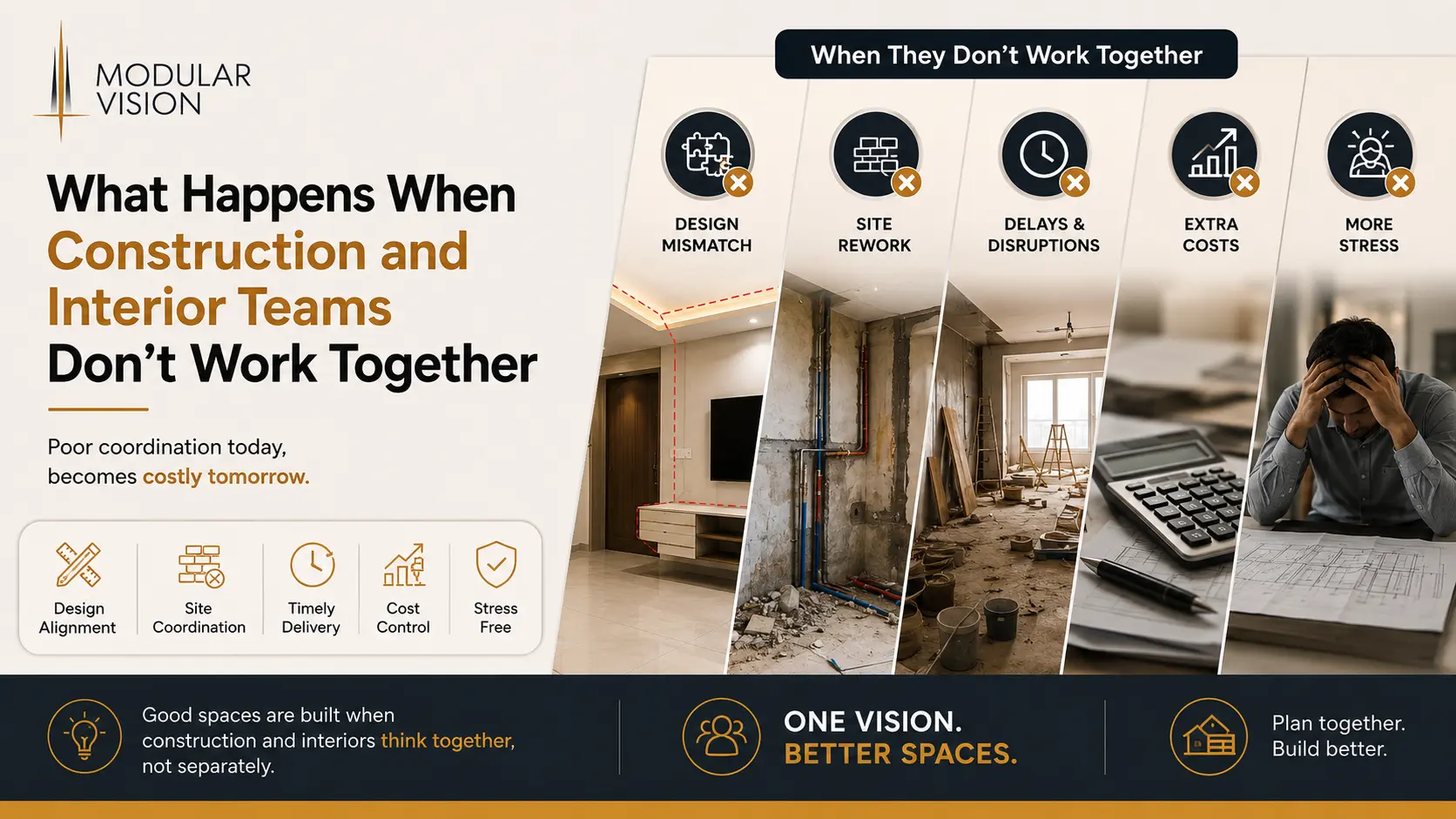
A home or office project may look simple from outside, but inside there is a lot happening at same time. Construction team is handling structure, walls, ceiling, plumbing, wiring and all the base work. On the other side, interior team is planning layout, storage, furniture, lighting, finishes and overall look.
When both teams do not work together, small mistakes slowly turn into big clashes.
This is one of the main reasons many homeowners today prefer working with a single company for both construction and interior design. Managing both services under one roof helps reduce confusion, improves coordination, and ensures that every stage of the project follows the same vision from start to finish.
Why clashes happen between construction and interior teams
Many times construction starts first, and interior designers come much later. At that point, the basic structure is already fixed.
Then problems start like:
- electrical points are in wrong place
- kitchen size does not fit planned cabinets
- wardrobe space becomes less than expected
- false ceiling blocks lighting design
- plumbing clashes with bathroom layout
- furniture does not match room dimensions
These issues happen not because one team is bad, but because both teams were not planning together from day one.
The cost of poor coordination
When construction and interior work separately, the result is usually more rework.
For example, if a home interior designer wants a TV unit on one wall, but construction team already made switches somewhere else, then changes are needed. Same thing happens in kitchen, bedrooms, washrooms and office spaces too.
This leads to:
- extra money spending
- delay in project
- repeated changes
- damaged finishes
- frustration for homeowner
- less polished final result
A lot of people think interiors are only about furniture and decor, but actually interior planning affects the full construction flow.
Spaces should be planned before work starts
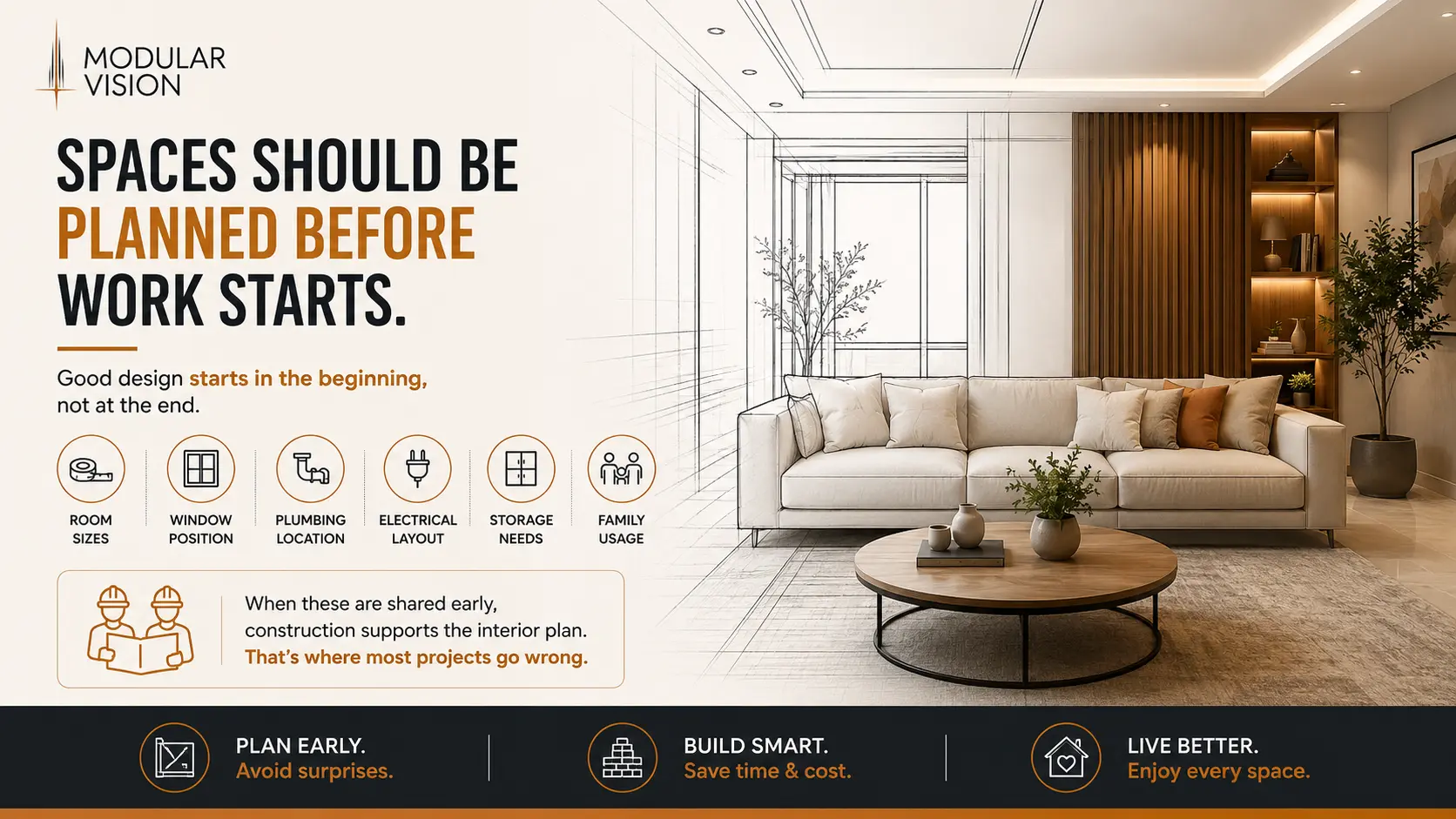
Good design is not added at the end. It starts in the beginning.
Interior designers need to know:
- room sizes
- ceiling height
- window position
- plumbing location
- electrical layout
- storage needs
- family usage patterns
When these things are shared early, construction can be done in a way that supports the interior plan. That is where many projects go wrong, because both teams work in separate directions.
Why integrated teams work better
When the same team or one connected team handles both construction and interior work, the project becomes more practical.
There is:
- better communication
- fewer mistakes
- faster execution
- proper space planning
- smoother material coordination
- better final finish
A trusted interior design company with construction capability can save homeowners from many avoidable headaches.
Why Modular Vision does both
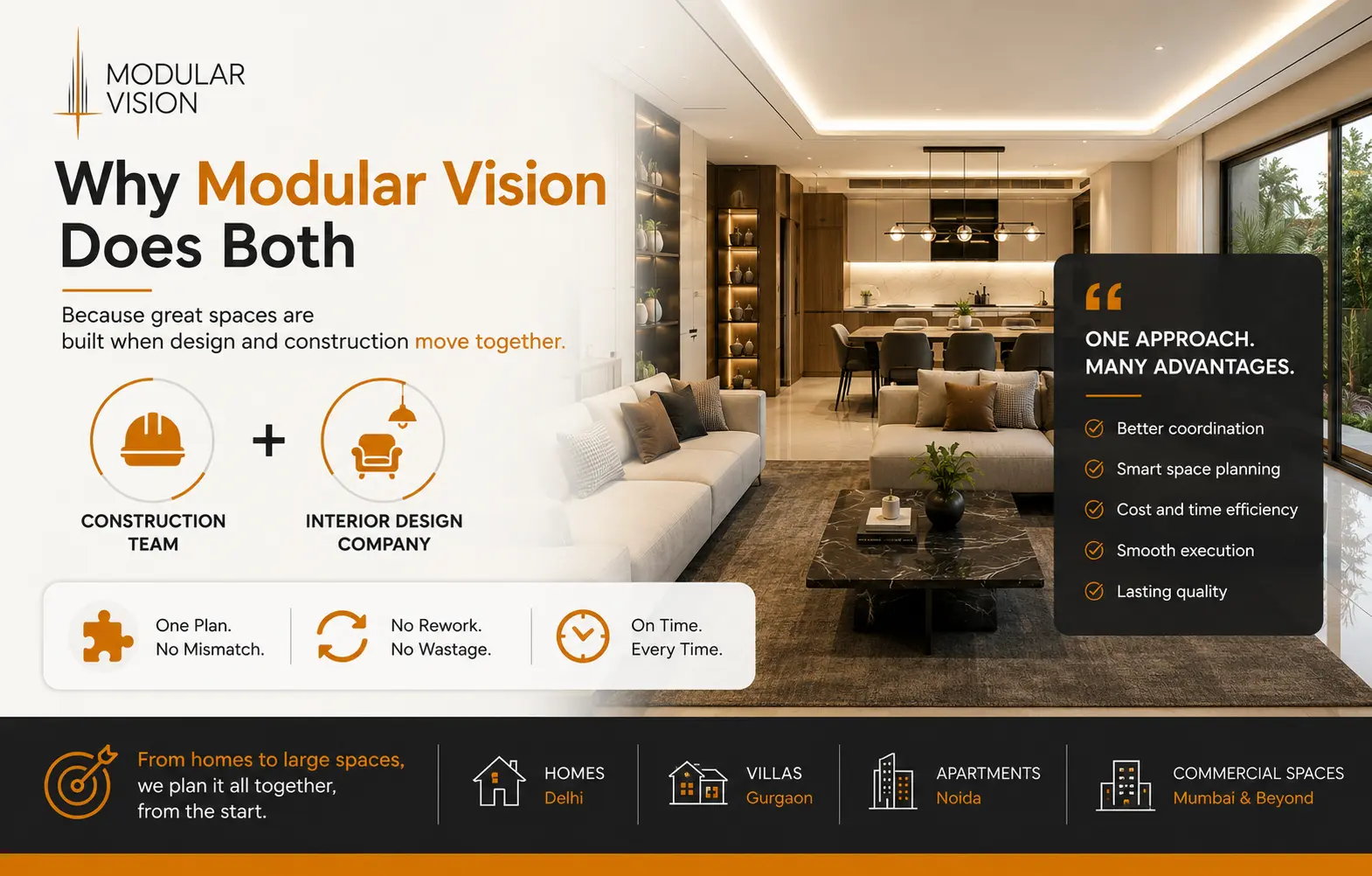
Modular Vision follows this integrated approach because home projects often fail when construction and interiors clash.
Instead of waiting for one phase to finish and then starting the other, Modular Vision plans both together. This helps in avoiding design mismatch, site rework, and last-minute changes.
That is why the company works as both:
- a construction team
- and an interior design company
This is useful for homes, offices, and more large spaces where coordination matters a lot.
Whether it is a house in Delhi, a villa in Gurgaon, an apartment in Noida, or a commercial space in Mumbai, the same problem comes again and again if teams do not work together. Modular Vision tries to solve that from the start.
Better for home, office and commercial projects
Construction and interiors must match each other in every type of project.
For a home, it means better room planning and comfort.
For an office, it means proper seating, lighting, workflow and storage.
For a commercial space, it means brand feel and smooth usage.
A home interior designer alone cannot fix a bad construction layout later. And a construction team alone cannot predict every interior need. That is why both sides need to move together.
Final thought
When construction and interior teams do not work together, the project usually ends with clashes, delays and extra cost. The structure gets fixed in one way, and then interiors demand something else. That is where problems begin.
A combined approach is always smarter. It gives better planning, better use of space, and better final output.
That is the reason Modular Vision handles both construction and interior design together — so the home is not just built well, but designed well from the start.