 Your living room is more than just a space with a sofa and a coffee table — it’s the heart of your home. It’s where conversations happen, guests gather, movie nights unfold, and memories are made. But even beautifully furnished homes can feel incomplete when a few common interior design mistakes sneak into the space. The good news? Most living room design mistakes are easy to fix once you know what to look for. From poor furniture placement to choosing the wrong rug size, small decisions can dramatically impact the overall feel and functionality of your living room. Here are 7 common interior design mistakes you should avoid in your living room — and how to fix them like a pro.
1. Choosing the Wrong Size Rug
One of the most common living room design mistakes is choosing a rug that is too small for the space. Many homeowners focus only on the color or pattern of the rug and forget how important the size is. A small rug can make the furniture look disconnected and leave the room feeling incomplete and unbalanced.How to Fix It:
Always choose a rug that is large enough to connect your seating area. Ideally, at least the front legs of your sofa and chairs should sit on the rug. You should also leave around 18–24 inches of floor space between the rug and the walls for a balanced look. A properly sized rug helps define the space, anchors the furniture, and makes the entire living room feel more cohesive, comfortable, and well-designed.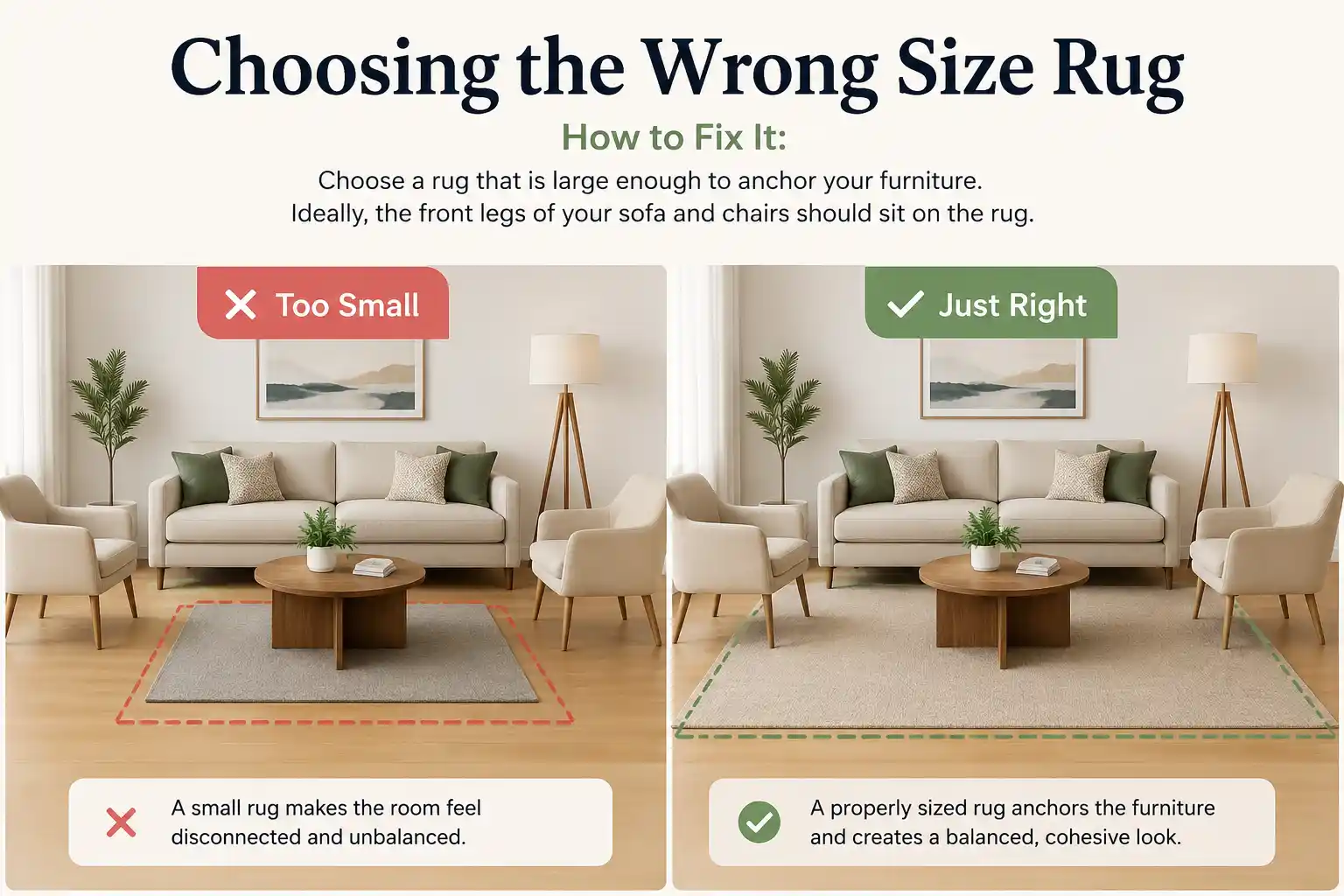
2. Pushing All Furniture Against the Walls
One of the most common living room mistakes people make is placing all the furniture directly against the walls. It may seem like this creates more space, but in reality, it often makes the room feel cold, empty, and less inviting. Many homeowners think keeping the center open will make the living room appear bigger, but it can actually disrupt the natural flow of conversation and connection.How to Fix It:
Instead of pushing everything outward, try bringing your furniture slightly inward. Position sofas and chairs closer together around a coffee table to create a cozy conversation area. Even a small adjustment can completely change the feel of the room. Interior designers often use this technique to make spaces feel warmer and more balanced. Even in smaller living rooms, floating furniture away from the walls adds comfort, improves functionality, and creates a more welcoming atmosphere where people naturally want to sit, relax, and spend time together.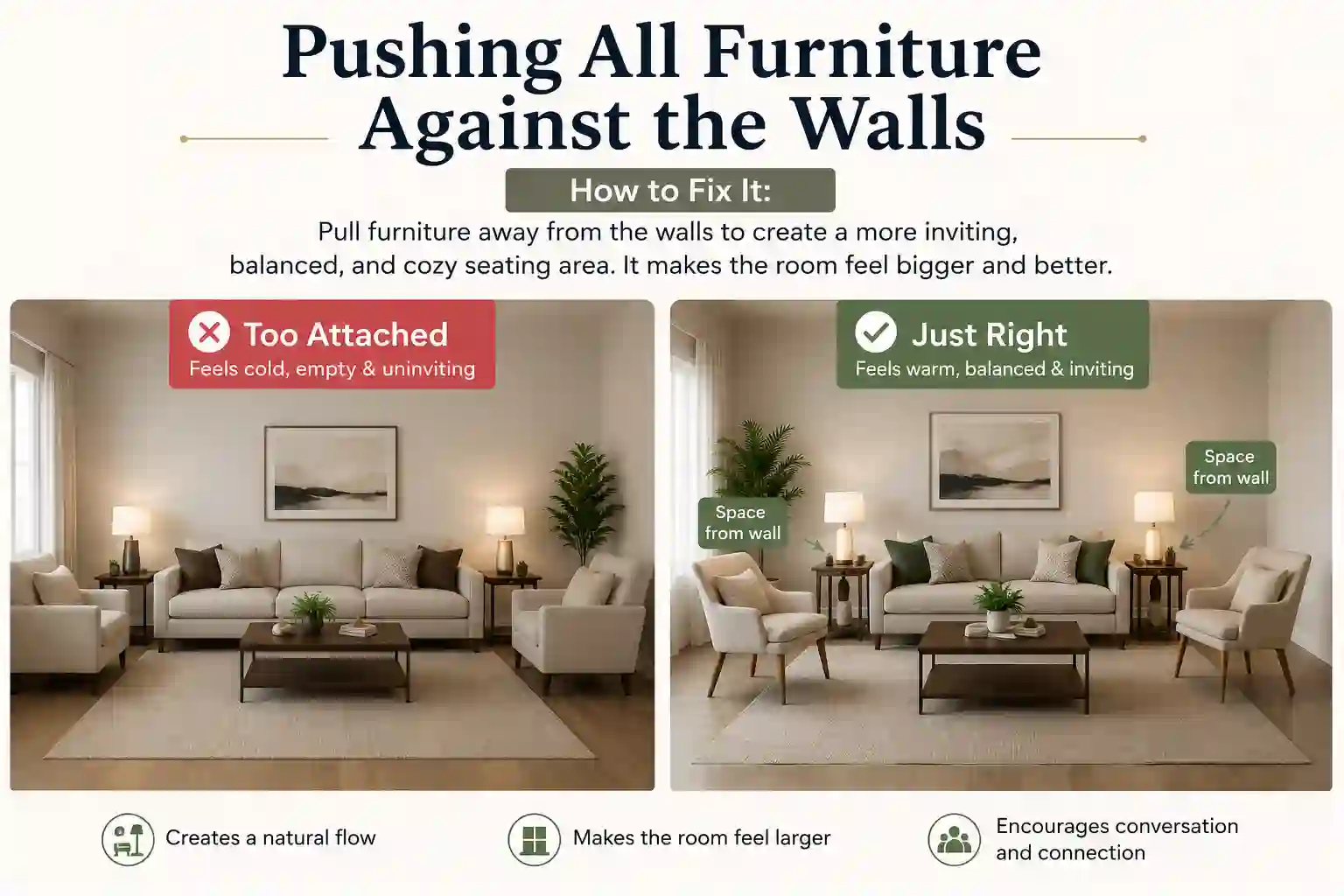
3. Buying Furniture That’s Too Large
Large furniture may look beautiful and luxurious in a showroom, but once it arrives at home, it can completely overwhelm your living room. Many homeowners make the mistake of choosing oversized sofas, bulky coffee tables, or heavy armchairs without considering the actual size of their space. As a result, the room starts to feel cramped, cluttered, and difficult to move around in.How to Fix It:
Before buying any furniture, always measure your living room carefully. A simple trick many designers recommend is using masking tape on the floor to outline the size of the furniture you plan to buy. This helps you visualize how much space each piece will occupy. Choose furniture that matches the scale of your room instead of simply following trends. A well-proportioned sofa or compact coffee table can make your living room feel more open, functional, and comfortable while still maintaining a stylish and elegant look.4. Making Everything Too Matchy-Matchy
Many homeowners believe that buying matching furniture sets will automatically make their living room look polished and well-designed. While matching pieces may feel safe and coordinated, too much of the same color, texture, or style can make the space feel flat, repetitive, and lacking personality. A living room should feel collected and lived-in, not like a furniture showroom.How to Fix It:
Instead of matching everything perfectly, try mixing different textures, materials, and furniture styles. Pair a modern sofa with a vintage coffee table, or combine linen cushions with leather or wooden accents to create depth and visual interest. The goal is not perfection but balance. Use complementary colors and repeated tones throughout the room to keep everything connected naturally. Interior designers often layer different fabrics, finishes, and décor pieces to make a space feel warm, stylish, and full of character while still maintaining a cohesive overall look.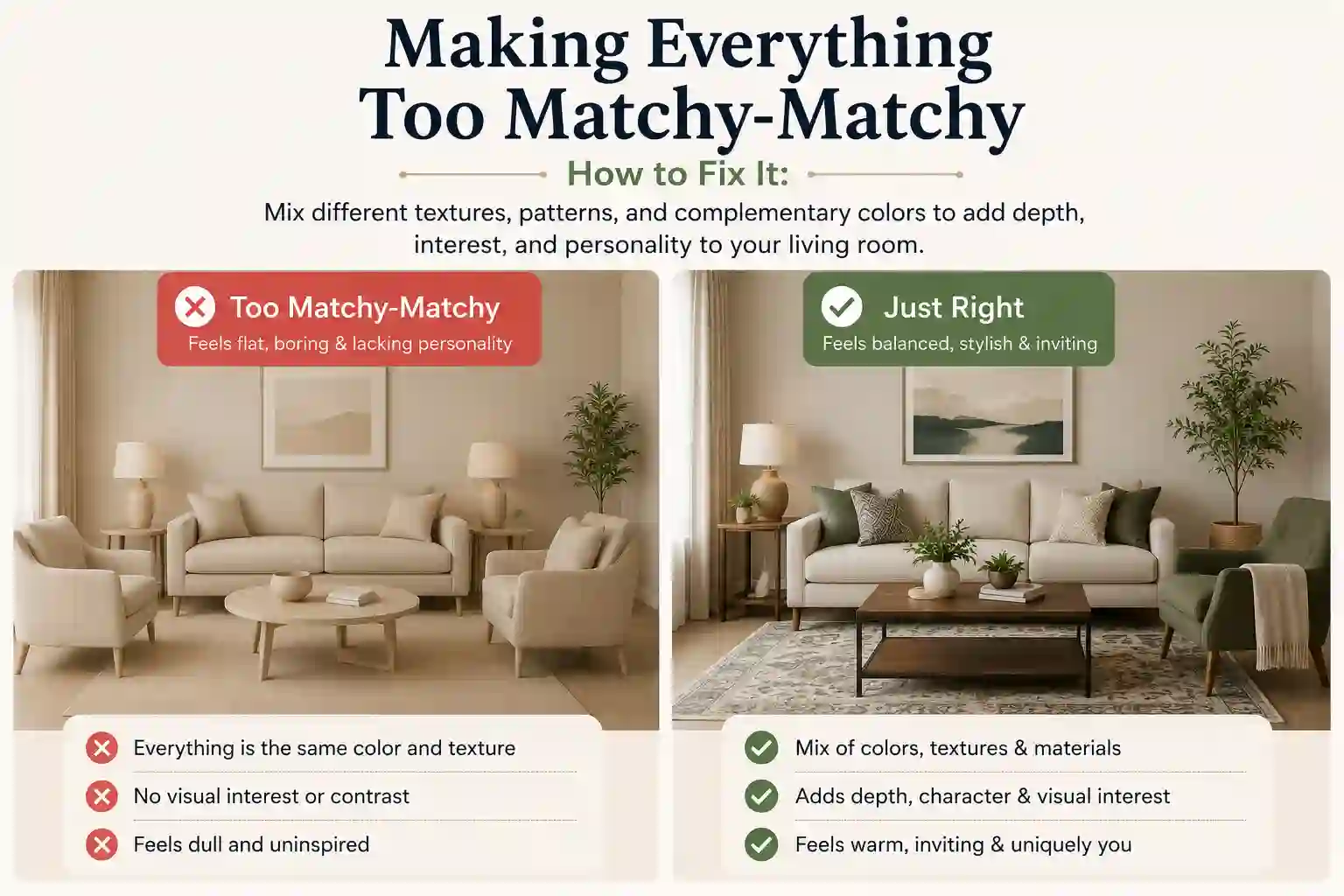
5. Ignoring Proper Lighting
Lighting can completely change the mood of a living room, yet it is often one of the most overlooked parts of interior design. Many homes rely on a single ceiling light, thinking it is enough to brighten the space. But harsh overhead lighting can make a living room feel flat, cold, and uninviting, no matter how beautiful the furniture or décor may be.How to Fix It:
The secret to a warm and welcoming living room is layered lighting. Instead of depending on just one light source, combine different types of lighting throughout the room. Use ambient lighting like ceiling fixtures for overall brightness, task lighting such as floor or table lamps for reading and relaxing, and accent lighting like wall sconces or decorative lamps to add depth and character. Interior designers often say lighting creates the atmosphere of a home. The right lighting setup can instantly make your living room feel cozy, comfortable, elegant, and far more inviting for everyday living and entertaining guests.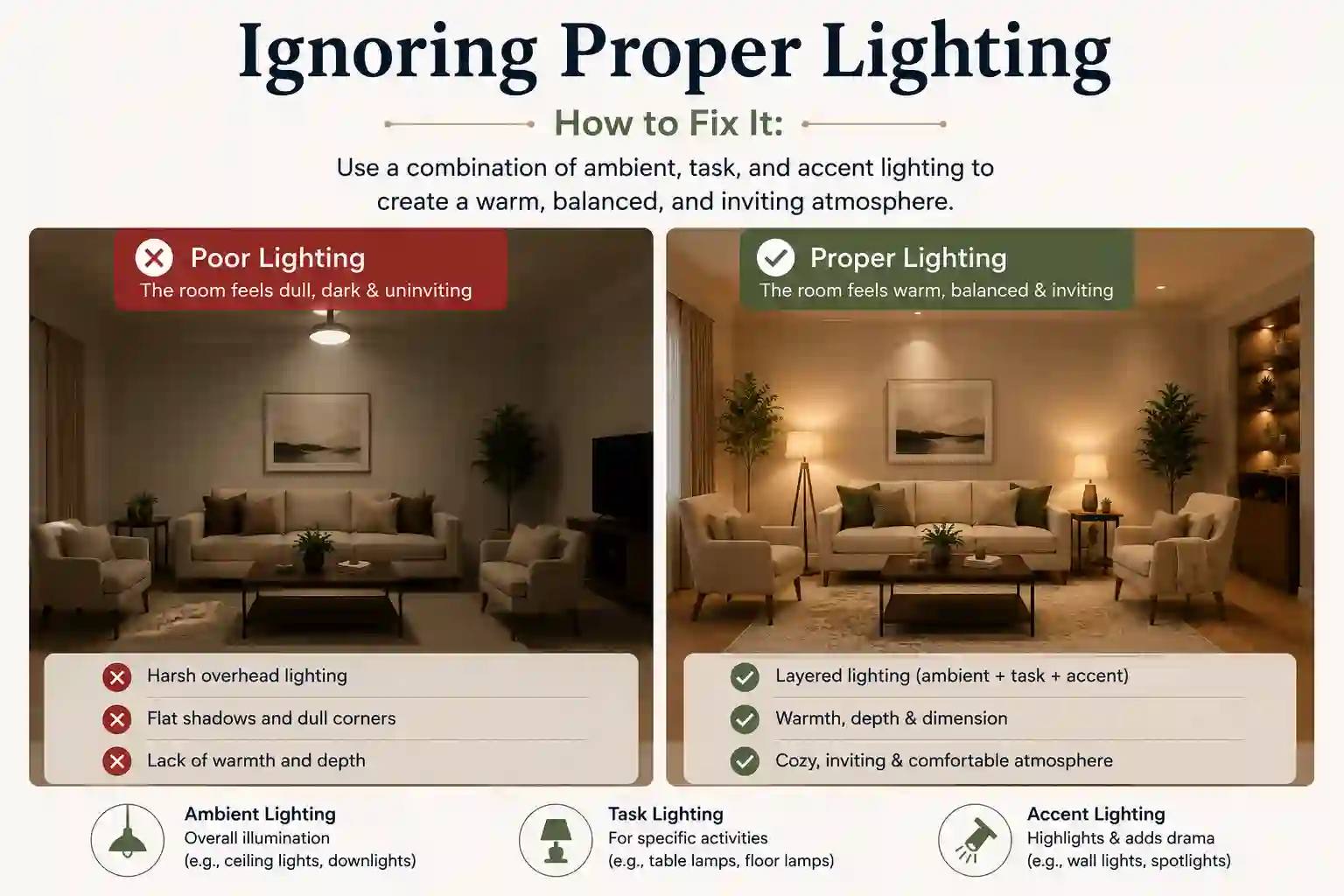
6. Overdecorating the Space
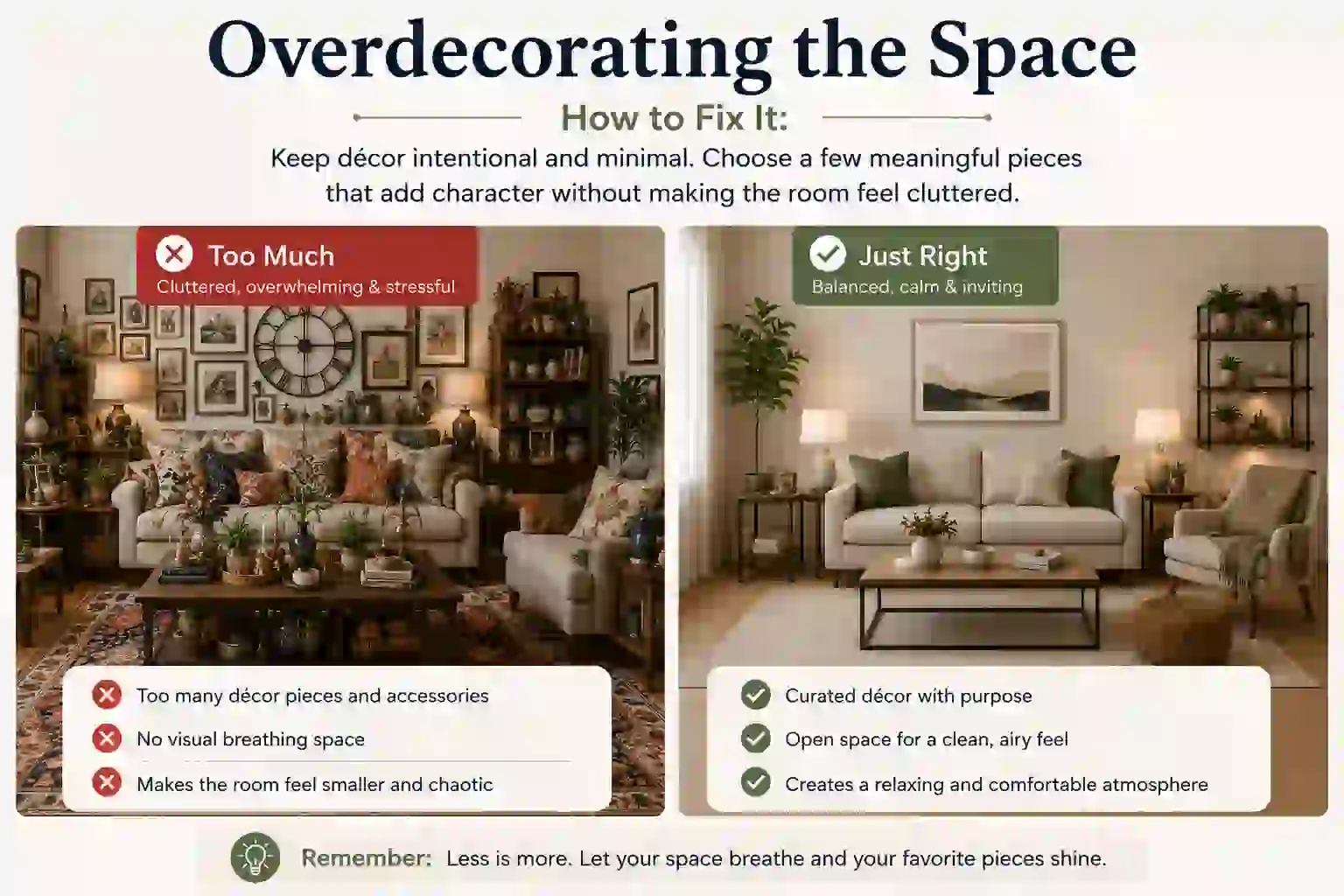
Decorating a living room is exciting, and it’s easy to keep adding cushions, photo frames, candles, vases, and decorative pieces to make the space feel complete. But sometimes, too many accessories can have the opposite effect. Instead of looking stylish and cozy, the room starts to feel crowded, cluttered, and visually overwhelming.How to Fix It:
The key to a beautifully designed living room is being intentional with your décor choices. Rather than filling every empty shelf or corner, focus on a few meaningful statement pieces that truly reflect your personality and style. Interior designers often follow the “less is more” approach. Arrange décor items in groups of three or five for a balanced look, mix patterns carefully with solid colors, and leave enough empty space between accessories so the room can breathe. A thoughtfully styled living room always feels more elegant, organized, and relaxing. Sometimes, removing a few unnecessary items can instantly make the entire space look more sophisticated and welcoming.